 WhatsApp
This is a practical Kenya guide to growing arrowroots (nduma), with emphasis on Dasheen - the short-cycle type large buyers like for ~0.5 kg cooking tubers. Written for farmers who want clear steps, not guesswork.
Where numbers appear for our supply, they are farm rules you can order against: Ksh 10 per sucker/seedling, minimum 500 pieces, spacing 50 cm × 40 cm (~20,000 plants per acre), maturity 6–8 months.
Planting material from this farm
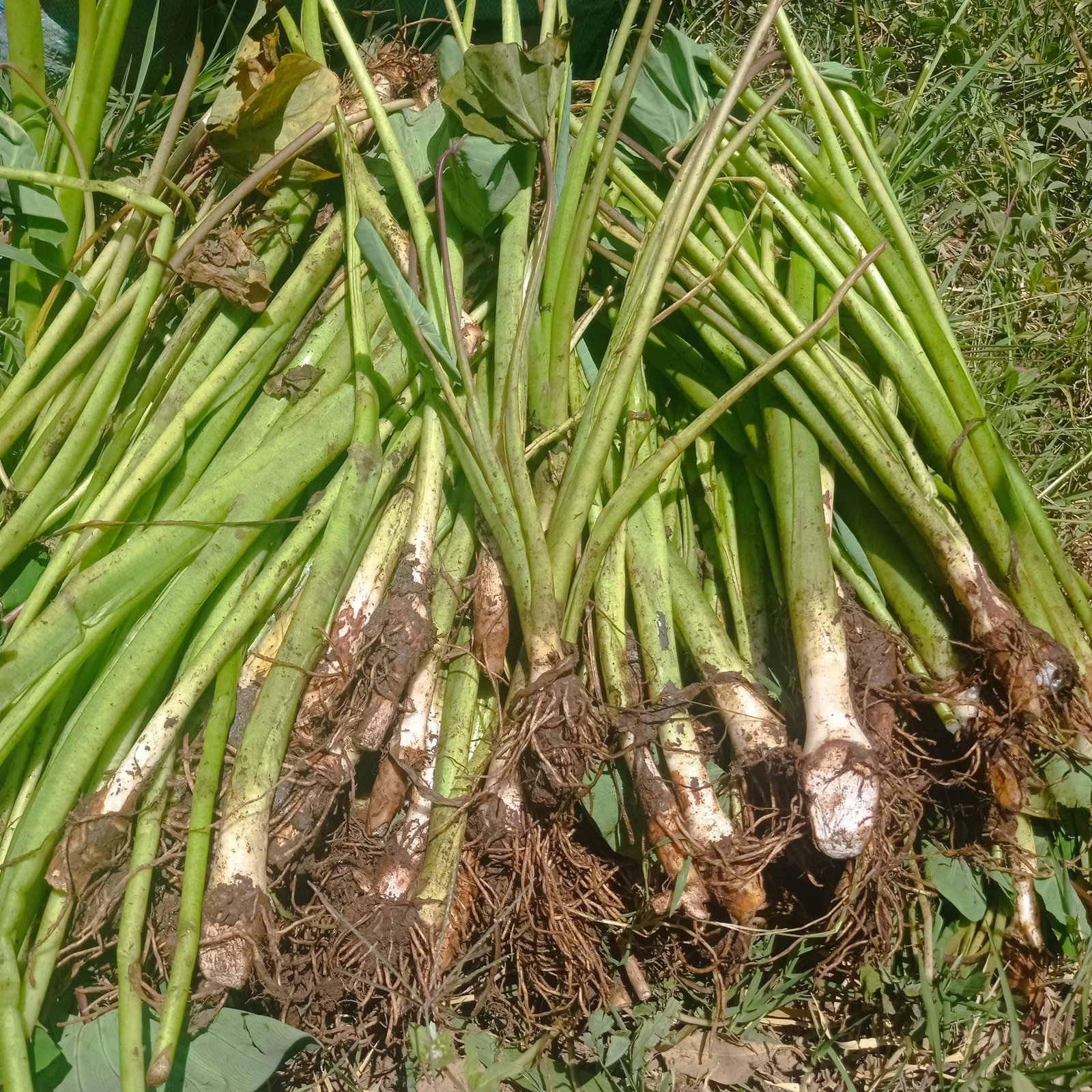
Dasheen suckers and seedlings · Ksh 10 each · minimum 500 pieces · Meru · Nairobi collection · delivery on request
WhatsApp 0725431452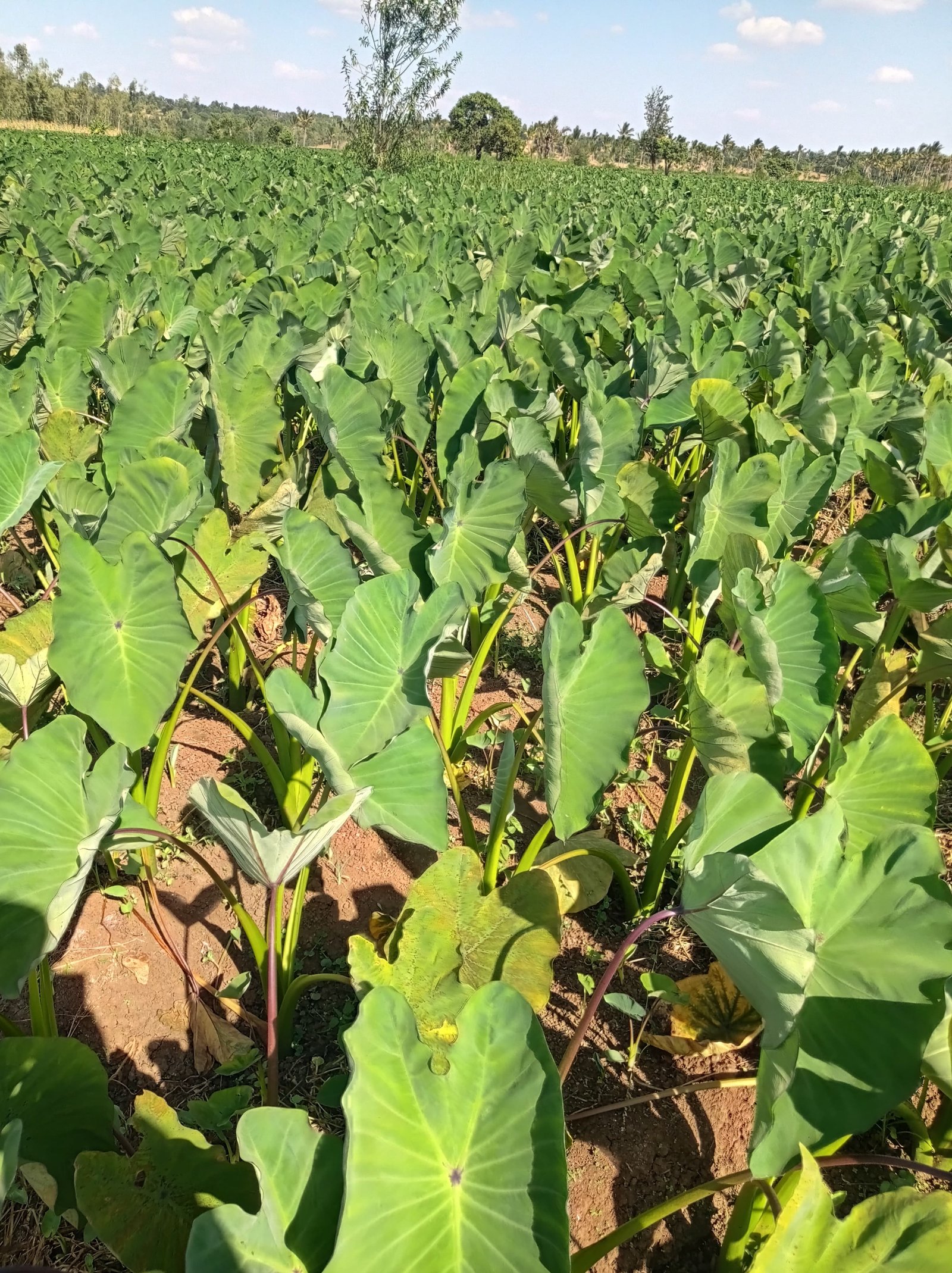
1. What Kenyans mean by arrowroots / nduma
In everyday Kenya speech, nduma and arrowroots usually point to cocoyam/taro-type crops in the Colocasia esculenta group - not cassava and not true yam (Dioscorea). Dasheen is the commercial type we supply as suckers.
See also: nduma vs yam vs cassava and types of arrow roots in Kenya.
2. Why Dasheen for commercial growers
| Trait | Dasheen (our focus) |
|---|---|
| Maturity | 6–8 months (short cycle among arrowroots) |
| Tuber size buyers like | About 0.5 kg each |
| Zones | Upland and lowland with irrigation |
| Rot pressure | Rarely hit vs many types (still manage water) |
| Field look | Dark green leaves and stems |
| Kitchen | Whitish when cut; powdery when cooked |
3. Climate, soil, upland vs lowland
You do not need a permanent river swamp. Upland arrowroot technology works when trenches, mulch, and irrigation hold moisture. Lowland sites still need drainage after storms.
Deep loams help. Keep fields weed-free. Details: upland arrowroot farming and planting in dry areas.
4. How to plant (farm checklist)
- Source clean Dasheen suckers/seedlings (min 500 from us).
- Keep the plot weed-free.
- Use clean irrigation water.
- Dig holes 20–30 cm deep - depth and size drive quality.
- Add 500 g well-decomposed farmyard manure per hole.
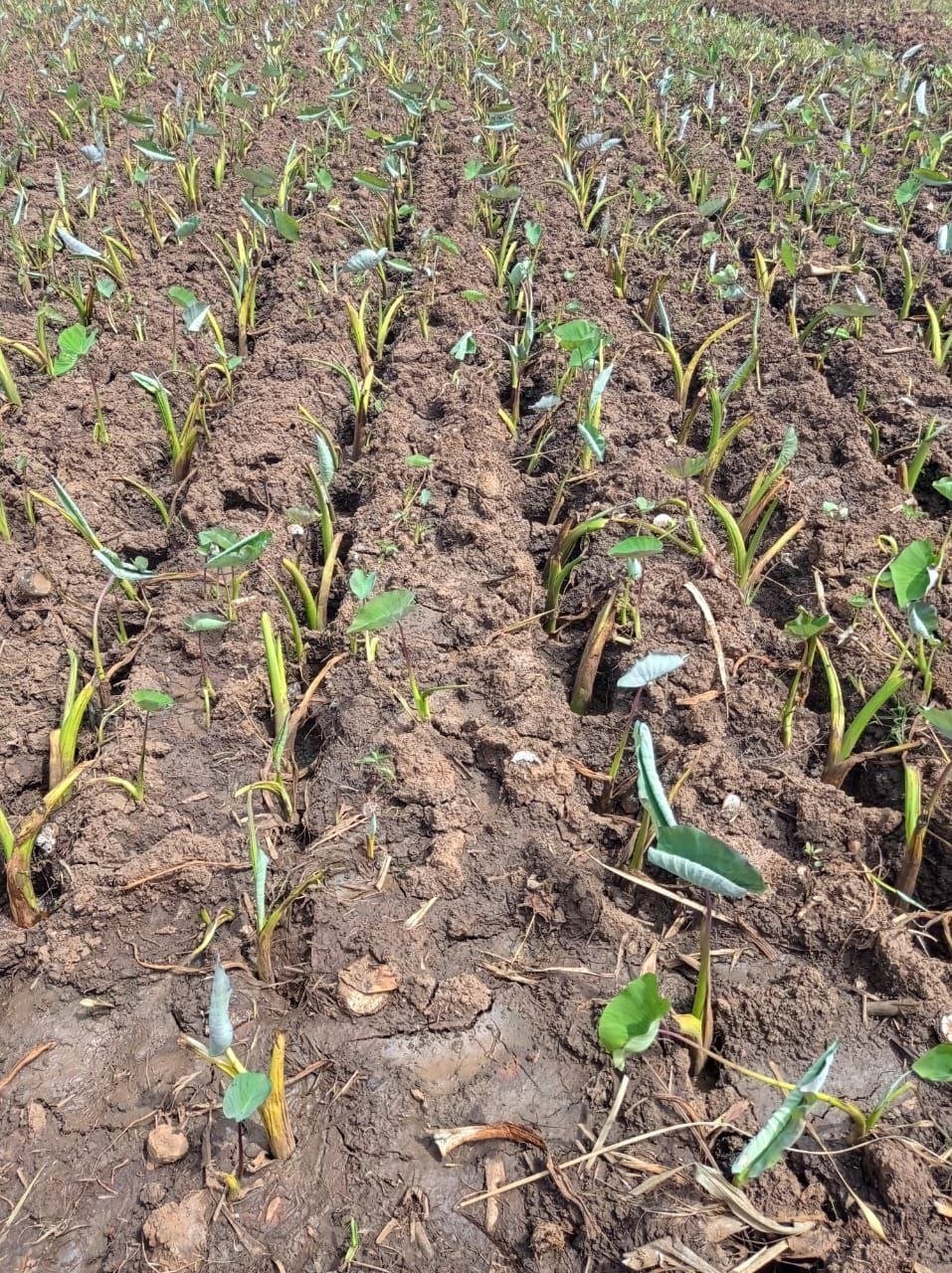
- Place one sucker per hole, touching the bottom; light soil cover.
- Spacing: 50 cm × 40 cm (~20,000 / acre).
- After 2 weeks: goat or cow manure top-up.
- Mulch with grass; water at least 6 months.
5. Manure and fertilizer rules
Best: goat and cow manure, well decomposed. Avoid: chicken and pig manure on arrowroots - poor bulking. Full write-up: how to fertilize arrowroot.
6. Water, mulch, dry areas
About 30% of potential yield is lost if irrigation is insufficient. Mulch cuts evaporation. Dryland farmers must design water first - see dry-area guide above.
7. Maturity and harvest timing
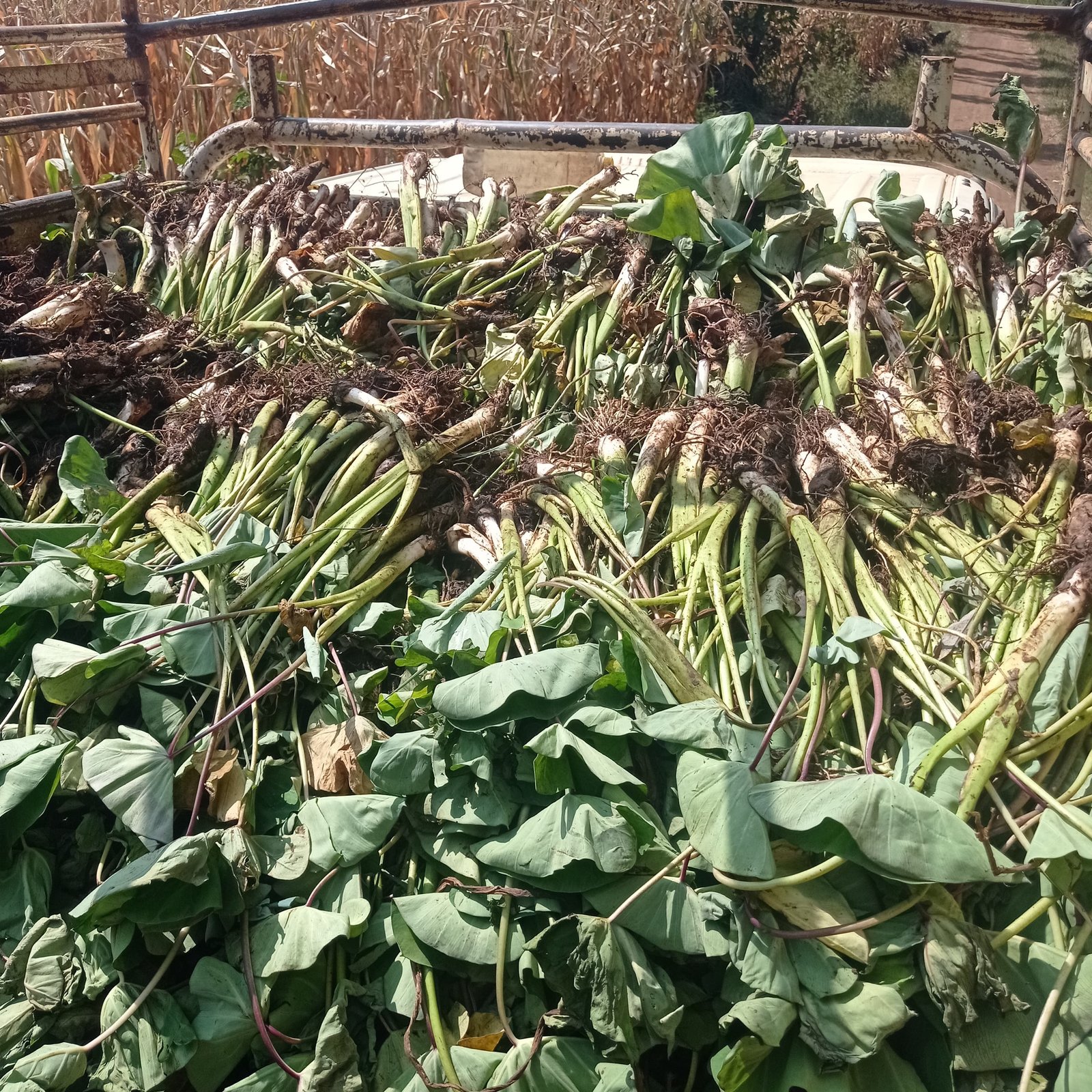
Give Dasheen 6–8 months. Early digs produce soggy or hard tubers that will not cook well. The last two months stiffen tubers for pots and buyers.
8. Costing and where to sell
Sucker bill at our price: 500 pcs = Ksh 5,000 minimum; ~20,000/acre ≈ Ksh 200,000 for planting material alone, plus manure, labour, water.
Markets: hotels, traders, open markets - where to sell arrowroots in Kenya. Profit framing: how profitable is arrow roots farming.
9. Where to buy suckers
| Item | Our offer |
|---|---|
| Product | Dasheen suckers / seedlings only |
| Price | Ksh 10 each |
| Minimum order | 500 pieces |
| Pickup | Meru farm |
| City access | Nairobi collection |
| Other | Delivery on request |
| Contact | 0725431452 WhatsApp / call |
Contact for planting material
Minimum 500 pieces · Ksh 10 · Dasheen as described above